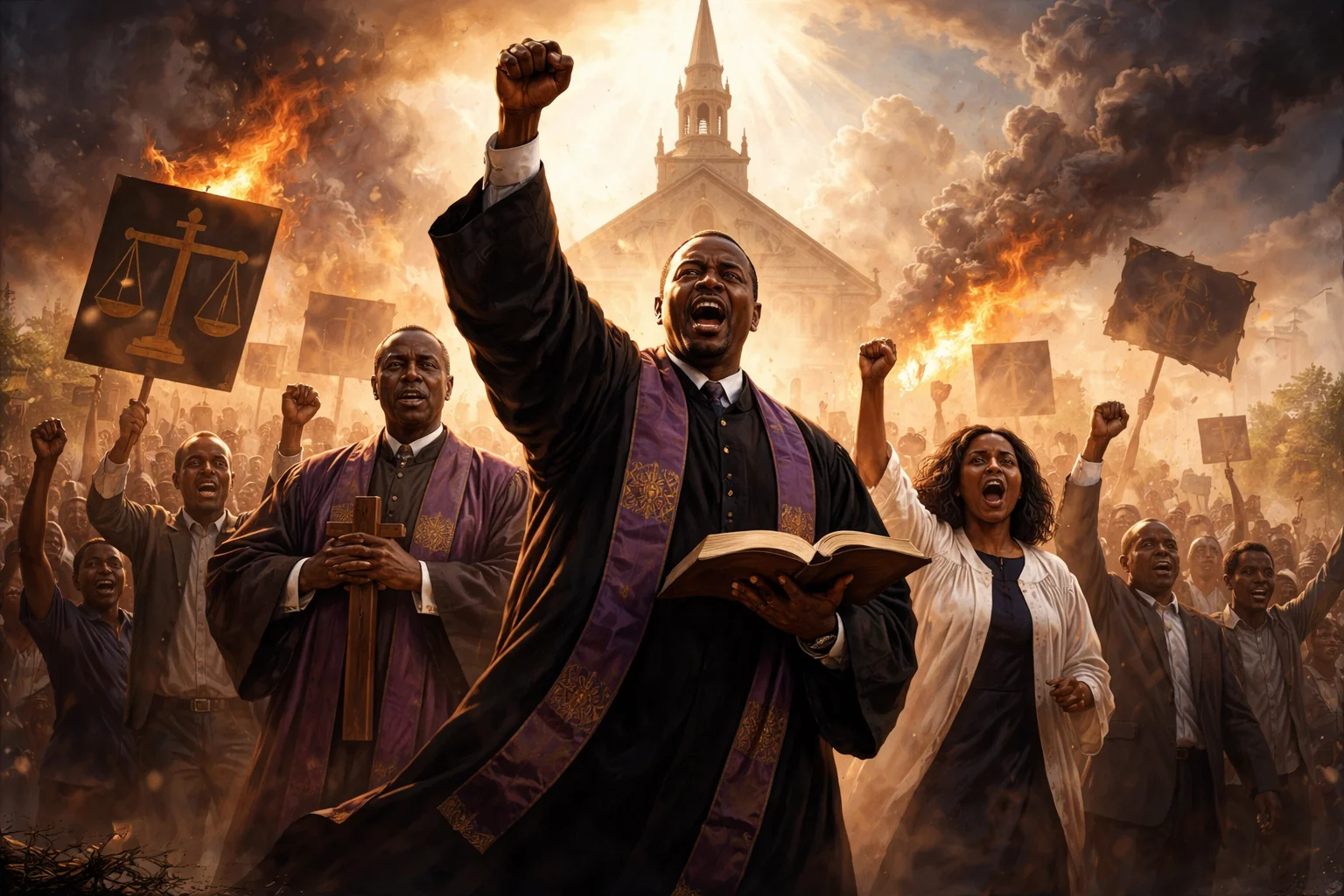
There is a dangerous misconception in modern Christianity that faith should be quiet, private, and detached from the public struggles of the world. Some argue that speaking out and protesting against injustice is “political”, divisive, or incompatible with Christian humility.
Yet history, Scripture, and the very life of Jesus Christ tell a radically different story. Christianity, at its core, is not a passive belief system. It is faith that confronts injustice, challenges power and demands moral courage.
Christians are not merely called to personal piety; they are called to public righteousness. When injustice thrives — whether through racism, poverty, violence, corruption, or oppression — silence is not neutrality. It is complicity.
The Biblical Mandate for Justice
The call for justice is woven throughout the Bible. It is not an optional add-on to the Christian faith; it is central to it. The prophet Micah famously asked:
“What does the Lord require of you but to do justice, love mercy, and walk humbly with your God?” — Micah 6:8
Justice is not separate from humility or faithfulness — it is an expression of them.
In the Old Testament, God repeatedly condemns societies that maintain religious rituals while ignoring injustice. Through the prophet Amos, God declares:
“I hate, I despise your religious festivals... But let justice roll like a river, righteousness like a never-failing stream.” — Amos 5:21–24
Worship divorced from justice is not only hollow; it is offensive to God.
Jesus Himself embodied this mandate. His ministry consistently centered on those marginalized by society: the poor, the sick, women, children, ethnic outsiders, and sinners. In His first recorded sermon, Jesus announced His mission plainly:
“The Spirit of the Lord is upon me... to proclaim good news to the poor... freedom for the prisoners and recovery of sight for the blind, to set the oppressed free.” — Luke 4:18
To follow Christ is to follow someone who challenged unjust systems, confronted religious hypocrisy, and paid the ultimate price for speaking truth to power.
Silence Has Never Been Neutral
Throughout history, some Christians have used faith to justify inaction, claiming that social issues are “worldly” or that change should be left entirely to God. However, history exposes the danger of such thinking.
One of the clearest examples is slavery. While many Christians defended slavery using selective readings of Scripture, others recognized that the gospel fundamentally opposed the dehumanization of any person made in the image of God.
Abolitionists like William Wilberforce in Britain and Frederick Douglass in the United States — both deeply shaped by Christian convictions — refused to separate faith from justice. Wilberforce spent decades fighting the British slave trade, driven by the belief that Christianity demanded moral responsibility in public life.
Similarly, during the Civil Rights Movement, many churches remained silent — or worse, actively resisted desegregation. Yet it was Christian leaders like Dr. Martin Luther King Jr. who reminded the nation that justice is a spiritual issue. Writing from a Birmingham jail, King criticized those who urged patience over action, calling their silence “more frustrating than outright rejection.”
His message was clear: waiting for justice often means denying justice.
History shows that injustice does not fade on its own. It persists when good people — including people of faith — choose comfort over courage.
Jesus and the Cost of Confrontation
One reason Christians hesitate to stand against injustice is fear — fear of backlash, loss of status, or conflict. But Christianity has never promised safety. It promises truth.
Jesus confronted both religious and political authorities. He overturned tables in the temple, publicly rebuked corrupt leaders, and exposed systems that exploited the poor under the guise of religion. His crucifixion was not the result of quiet spirituality; it was the consequence of disruptive righteousness.